Red Flags vs Green Flags in Relationships: How to Know if They Are The One
Can small behaviors really tell whether someone is right for you? Many people ask this question when trying to understand relationship compatibility and long-term potential. Understanding red flags vs green flags helps you recognize whether your relationship is healthy, stable, and worth pursuing.
In modern relationships, emotions alone are not enough. You need clarity, communication, trust, and consistent behavior to build something meaningful. By identifying warning signs and positive signals early, you can make better relationship decisions and avoid emotional stress in the future.
What Are Red Flags in a Relationship?
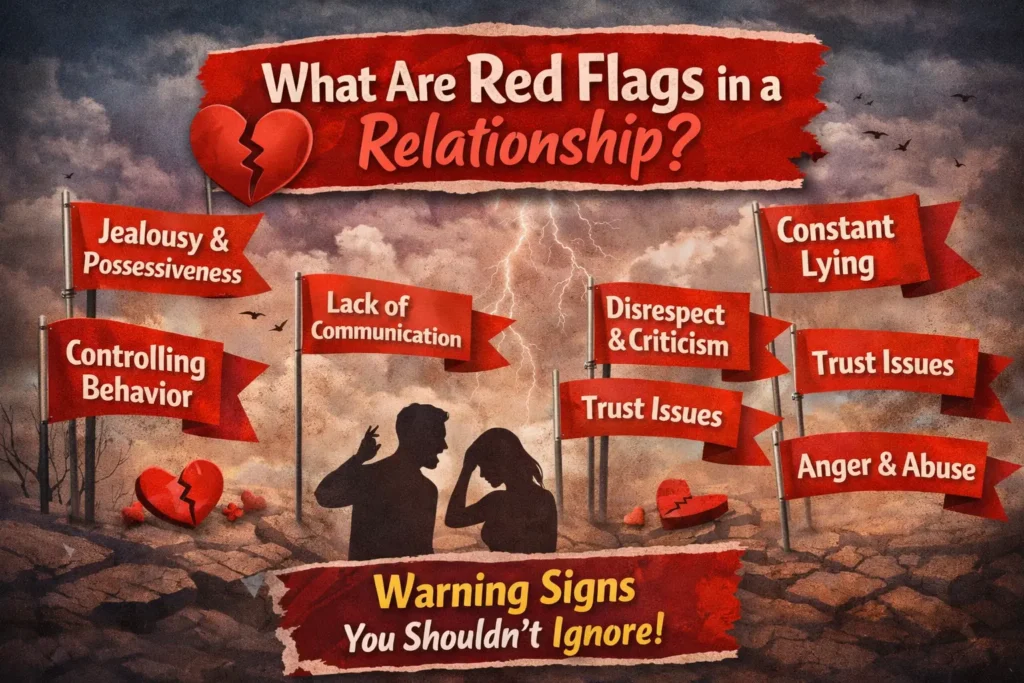
Red flags are warning signs that indicate unhealthy behavior, emotional instability, or potential relationship problems. These signs may appear early or gradually, but ignoring them often leads to misunderstandings, toxicity, or long-term issues. While every relationship has its ups and downs, a “flag” is a consistent pattern of behavior that affects your mental peace.
Red flags don’t always mean the relationship must end immediately, but they should never be ignored. They act as a reality check, helping you evaluate whether the person is emotionally mature and ready for a serious relationship. Understanding red flags vs green flags is essential because it allows you to see the difference between a small mistake and a dangerous personality trait.
Critical Red Flags: Signs You Should Never Ignore
When you are in the early stages of a relationship, these warning signs are often hidden behind “love bombing” (excessive attention). However, identifying these patterns early can save you from future emotional stress. Here are the critical signs:
If your partner always blames you or others for their mistakes and never says “sorry,” it shows a lack of emotional growth.
A major warning sign is when someone slowly tries to distance you from your close friends or family members to gain more control over you.
If they make you doubt your own memory or reality by saying things like “I never said that” or “You’re just being crazy,” they are trying to manipulate your mind.
Pay close attention to how they treat people in service roles, like waiters or drivers. This reveals their true level of empathy and character.
Avoiding important conversations or giving the “silent treatment” instead of solving problems is a sign that they cannot handle a mature relationship.
If they constantly check your phone, question where you are, or get angry when you spend time without them, it’s a sign of deep insecurity and a need for control.
Whether it is your physical space or your personal time, a partner who ignores your “No” is showing that they do not value your comfort.
One day they are obsessed with you, and the next day they are cold and distant. This emotional roller coaster is a tactic used to keep you anxious and attached.
Secretive behavior about their phone, finances, or past is a sign that there is no foundation of trust in the relationship.
If you are the only one making plans, apologizing, and trying to keep the spark alive, the relationship is one-sided and unsustainable.
Moving “too fast” and declaring intense love within days is often a red flag used to overwhelm your judgment before their true character shows.
Frequent and unpredictable outbursts of anger over small things indicate that the person is not emotionally stable.
What Are Green Flags in a Relationship?
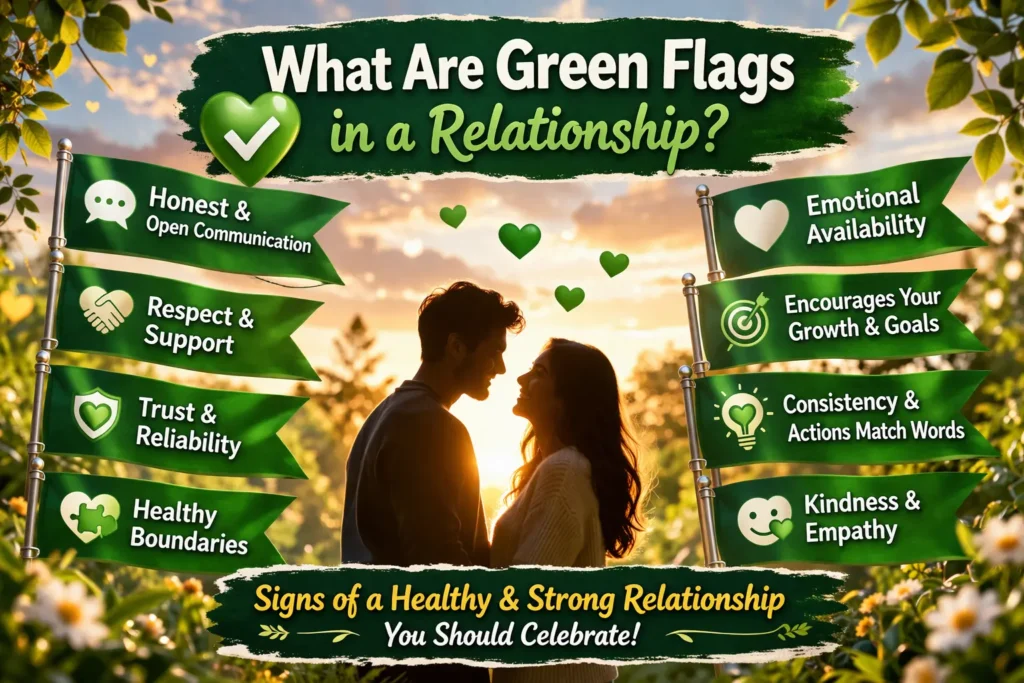
Green flags are positive signs that show emotional maturity, respect, and genuine interest. These behaviors indicate that the relationship has potential and can grow into something long-term and meaningful by building trust, improving communication, and creating emotional security between partners. Understanding red flags vs green flags is the foundation of identifying a healthy and stable connection.
Healthy Green Flags: The Foundation of a Strong Connection
When you notice these signs, it’s often a strong indication that your partner is serious and emotionally mature. Here are the most essential green flags to look for:
You feel safe sharing your thoughts without judgment, and your partner expresses their feelings clearly without playing mind games.
Their actions match their words consistently, which builds a strong foundation of mutual trust and reliability.
They respect your physical space, your time with friends, and your digital privacy without trying to control your life.
Instead of trying to “win” an argument, they stay calm and focus on finding a solution that helps the relationship grow.
They celebrate your personal wins and push you to be your best self rather than feeling threatened by your success.
Your views on family, honesty, and future goals align, ensuring you are both moving in the same direction.
They take full responsibility for their mistakes and apologize sincerely instead of blaming you or others.
They truly listen to your concerns and offer a shoulder to lean on, validating your emotions during tough times.
Your opinions are valued even during disagreements, and there is a deep sense of equality in the relationship.
Their presence brings peace to your life, and you don’t feel the need to constantly worry about their loyalty or intentions.
Red Flags vs Green Flags: Understanding the Key Differences
Understanding red flags vs green flags helps you clearly identify whether your relationship is healthy or risky. Here’s a simple comparison:
| Red Flags | Green Flags |
|---|---|
| Poor communication | Open communication |
| Controlling behavior | Respect for independence |
| Emotional manipulation | Emotional support |
| Inconsistent effort | Consistent behavior |
| Lack of trust | Honest and transparent |
This comparison makes it easier to evaluate your relationship and make smart decisions.
Early Dating Red Flags You Should Never Ignore
Early dating is the best time to identify warning signs. These signs may seem small at first, but ignoring them often leads to bigger problems later. Understanding red flags vs green flags early on is the smartest way to protect your heart.
- Love Bombing: Too much affection or gifts too quickly.
- Moving Too Fast: Talking about a serious future after just a few dates.
- Jealousy Without Reason: Getting upset over small things or your social life.
- Avoiding Serious Conversations: Changing the subject when things get real.
- Lack of Consistency: Being hot and cold with their attention.
- Disrespectful Behavior: Being rude to others or constantly blaming ex-partners.
Early Relationship Green Flags That Show Long-Term Potential
Just like red flags, early green flags also matter. These signs show that the relationship may have long-term potential. Identifying red flags vs green flags in the first few weeks helps you decide if the person is worth your time and energy.
- Honest Communication: Being clear about intentions and feelings from the very beginning.
- Respect for Boundaries: Valuing your personal space and time without any guilt trips.
- Emotional Maturity: Having the ability to talk about feelings and past mistakes calmly.
- Support Early On: Showing genuine care and empathy when you are having a rough day.
- Consistent Effort: Making a steady effort to connect and stay in touch every single week.
Biggest Red Flags That Signal a Toxic Relationship
Some red flags indicate a toxic environment and should never be ignored. Understanding red flags vs green flags is about protecting your mental well-being.
- Manipulation & Guilt-tripping: Making you feel responsible for their actions.
- Controlling Decisions: Dictating your personal choices or social life.
- Lack of Accountability: Refusing to admit fault and shifting blame.
- Chronic Dishonesty: A consistent pattern of lying or hiding info.
- Emotional Instability: Unpredictable behavior that makes you feel unsafe.
Strong Green Flags That Show They Might Be “The One”
Identifying red flags vs green flags is the best way to know if your partner has long-term potential. These signs show that your partner is serious and emotionally stable.
- Consistent Behavior: Actions that match words over the long term.
- Emotional Connection: A deep sense of being understood and safe.
- Shared Values: Alignment in life goals, family, and core beliefs.
- Mutual Respect: Treating you as an equal in all aspects of life.
- Healthy Communication: Ability to talk through anything without conflict.
- Support for Growth: Encouraging you to reach your full potential.
Why People Ignore Red Flags in Relationships
Ignoring warning signs often leads to emotional stress and disappointment. To build a healthy connection, you must carefully evaluate red flags vs green flags before committing your heart to someone.
- Emotional Attachment: Strong feelings making it hard to see the truth.
- Fear of Loneliness: Staying in a bad relationship just to avoid being alone.
- Physical Attraction: Letting chemistry overshadow toxic behavior.
- Hope for Improvement: Believing the person will change over time.
- Lack of Experience: Not knowing what a healthy relationship looks like.
Can Someone Have Both Red Flags and Green Flags?
Yes, every person has both strengths and weaknesses. The key is to understand which behaviors appear more often. If green flags outweigh red flags, the relationship may still be healthy.
How to Know If They Are Truly “The One”
Finding “the one” is not about perfection. It’s about compatibility, respect, and emotional connection. These factors help build a long-lasting relationship.
- You feel comfortable being yourself
- Communication is easy and natural
- You trust each other
- You share future goals
- You respect each other’s boundaries
How Love Compatibility Tools Can Help
Understanding relationship compatibility can sometimes feel confusing. Using a Love Calculator can help you explore your connection in a fun and engaging way. You can check compatibility, emotional match, and name connection instantly.
Try Our Love Calculator NowUnderstanding Relationship Stages
Relationships grow through different stages. Recognizing these stages helps you understand your partner better and identify whether your relationship is progressing.
7 Hidden Stages You Are In RelationshipKnowing these stages helps you avoid confusion and build stronger connections.
Conclusion
Understanding red flags vs green flags is essential for building a healthy relationship. While red flags warn you about potential problems, green flags show emotional maturity and long-term compatibility.
A healthy relationship is built on trust, communication, and mutual respect. By recognizing these signs early, you can avoid emotional stress and focus on meaningful connections.


